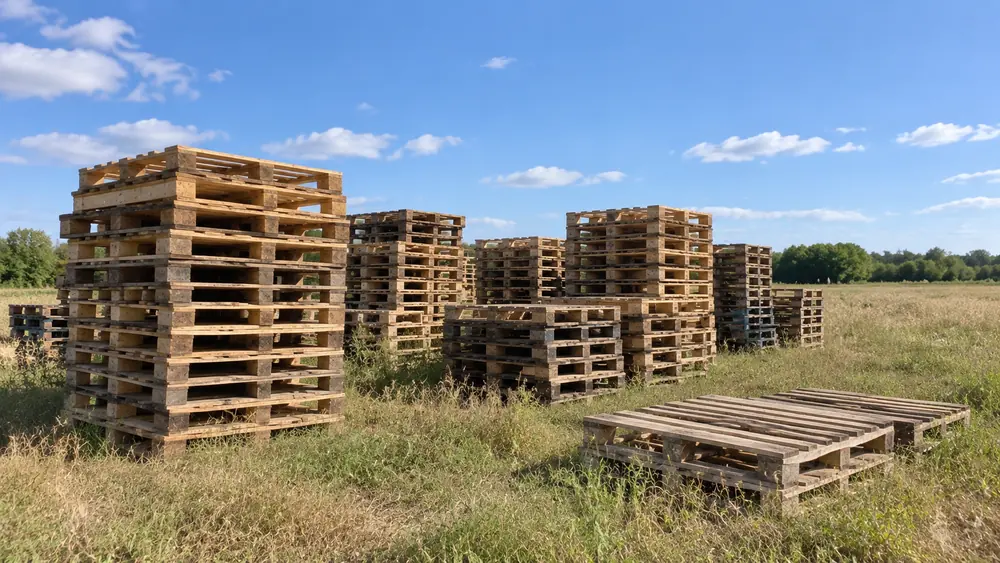
Grading gets stricter, not looser
The intuition is that a wet winter means accepting more marginal stock. The opposite is correct. Water hides defects — a damp pallet sounds different, splits close up, and mould is not yet visible — so our winter grading is deliberately harsher.
Units that would pass in July go to the repair bay in January. Our A-pool yield drops by several percentage points every winter and we accept that rather than shipping marginal stock.
Covered storage becomes the bottleneck
In summer, yard space is the constraint. In winter, covered space is. Premium pools, kiln-dried stock and repair timber all need to be dry, and there is a finite amount of roof.
This is why we buy heavily in January despite the weather: cheap stock bought in winter and stored properly becomes premium stock in March, and the storage decision is what makes that work.
The repair bay runs full
Winter is repair season. Outbound volume drops with agriculture, inbound recycling volume stays steady, and the bay catches up on everything deferred from harvest.
A pallet repaired in January is a pallet available in March, which is exactly when the valley starts asking for them.
Deliveries get rescheduled around the Columbia
Gorge wind and ice close I-84 most winters. Our eastern Oregon and Idaho routes get planned with a flex day built in, and customers on those lanes get told about it in advance rather than on the morning.
Nobody enjoys a rescheduled delivery, but everybody prefers a warning to a surprise.
Mulch demand collapses, biomass demand rises
Landscaping stops buying mulch in December and biomass boilers start burning harder. Our grinder output shifts accordingly: less double-ground, more fuel chips.
Having four output products instead of one is what makes the zero-landfill rule survivable across a season.
And the small thing nobody mentions
Everything is heavier. A wet pallet is nine pounds heavier than a dry one, and a crew moving six hundred of them a day feels that. Winter shifts are shorter, breaks are longer, and the kettle is always on.
Planning for weather is not only about product. It is mostly about people.