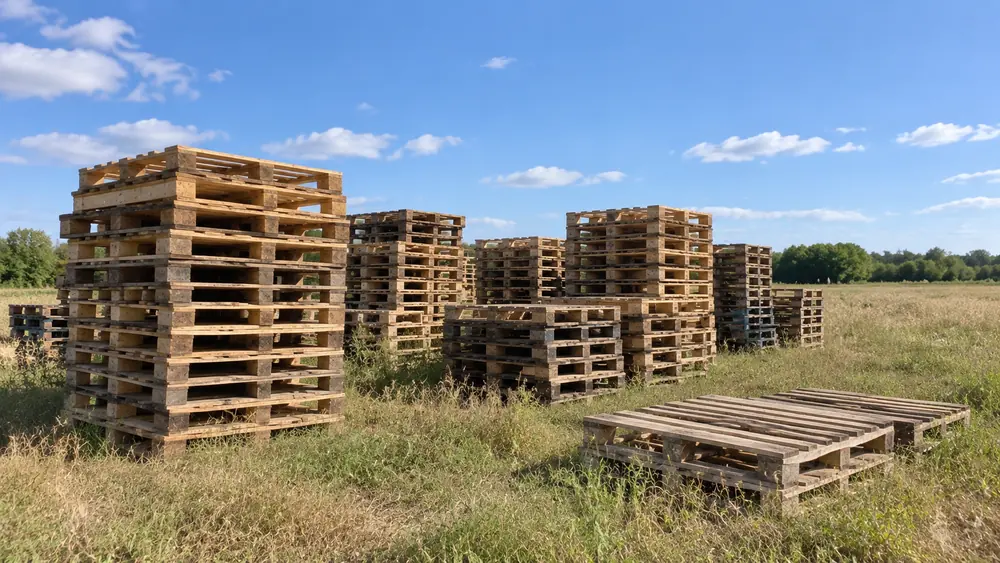
The first question is always the stamp
Before any pallet enters our fabrication shop it gets checked for an MB stamp. Methyl bromide fumigated wood is being phased out globally and there is no reason to build a dining table from it when heat-treated stock is abundant.
We only build from HT or untreated wood. For planters, raised beds or anything touching soil or food, that rule is absolute. If a piece of wood's history is unknown, it becomes mulch rather than furniture.
Which boards are worth using
Not every board from a retired pallet is furniture material. We are looking for clear grain, no through-splits, no deep forklift gouges and no oil staining. Realistically about a third of boards from a retired deck make the cut.
Douglas fir is our favourite for this. It takes a finish beautifully, the grain tightens with age, and a board that spent a decade under cider cases has a colour that cannot be bought new.
De-nailing is non-negotiable
Every fastener comes out. Not cut flush, not driven in — out. A nail fragment left inside a board will eventually find a planer blade, a saw tooth or a customer's hand.
After de-nailing we run a metal detector over every board. It takes seconds and it is the difference between a workshop and an accident.
Sanding, and the mistake most people make
The common error is sanding too far. Pallet wood's appeal is its history: the saw marks, the weathering, the faint stamp. Sand to 120 grit, knock off the splinters, and stop. Taking it to 220 produces something that looks like cheap new pine.
We finish with hardwax oil, which sits in the fibre rather than forming a plastic film. It can be repaired locally in ten years when somebody puts a hot pan on it, which a polyurethane finish cannot.
Structure: build like a joiner, not like a hobbyist
Pallet boards are thin and were never meant to span. Anything that will bear weight gets a proper frame underneath — new or reclaimed structural stock, joined and glued — with pallet boards as the visible surface.
This is the difference between a bench that lasts twenty years and one that sags in a season. The reclaimed material should be the face, not the skeleton.
The Passport stamp as a feature
Every piece we build carries the Passport IDs of the pallets it came from, usually burned into an end grain at eye height. Customers can look up what that wood did for a living.
It is a small thing and it changes how people relate to the object. A shelf is furniture. A shelf that moved hazelnuts for eleven years is a story with a shelf attached.