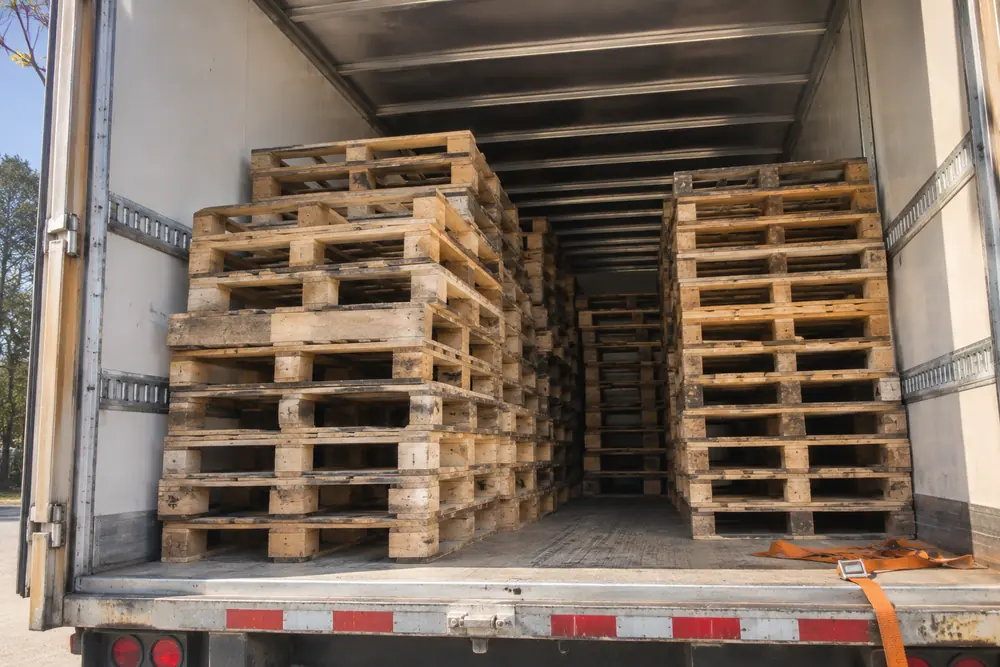
Force one: lumber price volatility sets the ceiling
Recycled pallet prices are anchored to new pallet prices, which are anchored to softwood lumber. When lumber spikes, recycled pallets become dramatically more attractive and the used pool tightens within weeks. When lumber falls, the spread narrows and some buyers drift back to new.
The practical implication for buyers: lock pricing for a quarter or longer when the spread is favourable. Spot buying in a rising lumber market is how packaging budgets get destroyed.
Force two: warehouse vacancy drives the supply pool
Used pallets come from warehouses. When distribution activity is high, the recycling pool is full and prices are soft. When vacancy rises and throughput falls, the pool thins at exactly the moment nobody expects it to.
This is counter-cyclical in an unhelpful way: pallet supply dries up during slowdowns, which is when buyers are least willing to pay more.
Force three: extended producer responsibility arrives
Several states, Oregon among them, have moved on packaging producer responsibility. Wood packaging has so far received less attention than plastic and fibre, but the direction is clear: packaging will increasingly need documented end-of-life handling.
Companies with a measured diversion certificate are going to find the next five years considerably easier than companies with a hauler invoice and no data.
Force four: automation raises the specification floor
Every automated warehouse commissioned raises demand for tightly specified block pallets and reduces tolerance for general-grade stock. This bifurcates the market: a premium screened pool at one end, and a growing volume of general stock at the other.
Yards that can screen reliably will do well. Yards that sell by the tonne will struggle.
Force five: recycling is professionalising
The industry grew out of scrap hauling and for decades competed on price alone. That is changing. Customers now ask for written grade specifications, published load ratings, insurance certificates, diversion data and carbon methodology.
We think this is excellent. It rewards the yards that were already doing the work and it makes the industry legible to procurement teams who previously treated pallets as an unmanaged cost.
What we would do if we were buying
Fix price for a quarter. Specify grade in writing with a racked load rating. Ask for diversion documentation from day one, even if nobody internally has requested it yet. And measure your own attrition before you blame your supplier.
None of that requires a bigger budget. It requires about one afternoon.