What the rule is actually for
ISPM-15 exists because wood-boring insects travel inside packaging. The Asian longhorned beetle and the emerald ash borer both crossed oceans in untreated crating, and the economic damage ran into billions. The standard requires that solid wood packaging used in international trade be treated to kill those organisms and visibly marked to prove it.
Two treatment methods are recognised: heat treatment, written HT, which requires 56 °C at the core of the wood for 30 continuous minutes; and methyl bromide fumigation, written MB, which is being phased out globally because the chemical destroys atmospheric ozone. We do heat treatment only, permanently, by choice.
How to read the mark
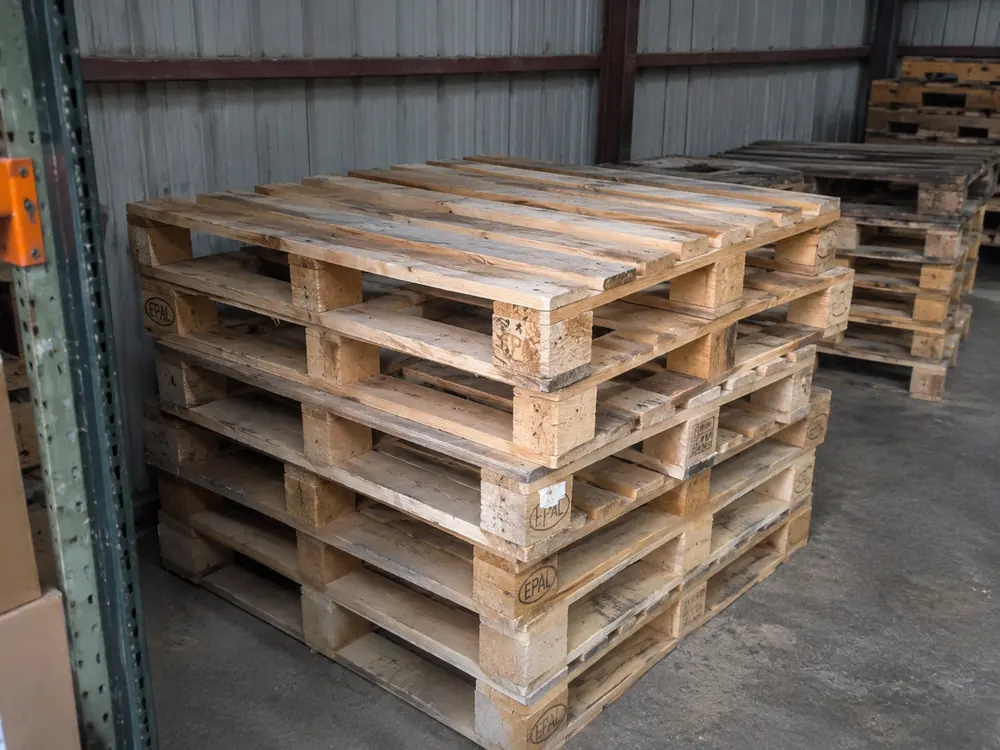
A compliant mark contains four elements: the IPPC wheat symbol, the two-letter ISO country code, a unique facility registration number issued by the national plant protection organisation, and the treatment abbreviation — HT or MB. On a Euro pallet these appear on the centre block; on a GMA stringer pallet they are typically branded onto two opposite stringers.
Marks must be legible, permanent and visible on at least two opposite sides. A mark that has been painted over, sanded away or applied with a marker pen is not a mark. Inspectors at destination ports are looking for exactly this.
The three failure modes we actually see
First: the customer assumes new wood is automatically compliant. It is not. Untreated new lumber needs treatment and marking just like used wood does.
Second: the customer assumes recycled wood cannot be compliant. Also false. A recycled pallet that is structurally sound, treated in our kiln and stamped by our registered facility is fully ISPM-15 compliant. Reuse and export compliance are not in conflict, and anyone telling you otherwise is selling new pallets.
Third, and most common: mixed loads. One untreated dunnage board in a container of beautifully stamped pallets can trigger a hold on the whole shipment. Bracing, blocking and chocks are solid wood packaging too. They need the mark.
Country quirks worth knowing
Australia and New Zealand apply additional biosecurity scrutiny and sometimes require treatment certificates alongside the mark. China has historically been strict about mark legibility. Some countries exempt processed wood products such as plywood and OSB, because manufacturing already involves heat and adhesive.
We flag known destination quirks when you book a batch, because the cost of getting this wrong is not a fine — it is a container sitting on a quay accruing demurrage while somebody arranges re-treatment or destruction.
The paperwork we keep for you
Each treated batch generates chart recorder data showing core temperature over time, probe placement photographs and a treatment certificate referencing the batch number. We archive all of it for seven years and can retrieve any batch on request.
Customers occasionally ask why we keep records that long when nobody has ever asked for them. The answer is that the one time somebody does ask, it will be during a dispute, and having the chart will be worth more than every hour spent filing them.