The double payment nobody notices
Walk behind almost any warehouse in Portland and you will find a pallet pile with a dumpster next to it. The company bought those pallets as packaging and is now paying a hauler to remove them as waste. The pile is inventory being treated as rubbish, and it is one of the most reliable sources of found money in a mid-sized operation.
We have seen sites paying six hundred dollars a month for pallet removal that were sitting on four hundred dollars a month of saleable Grade B stock. The net swing on that site was over a thousand dollars a month, and it took one email to change.
What makes a pile valuable
Three things: size consistency, grade, and access. A pile of 300 intact 48×40 GMA pallets is worth real money per unit. The same 300 units mixed with odd sizes, broken cores and a bicycle is worth considerably less because somebody has to sort it.
You do not need to sort it yourself, though. Sorting is literally our business and we are faster at it than your receiving crew. What helps is simply stacking the pile where a truck and a forklift can reach it, and telling us roughly what is in it.
The photograph is the quote
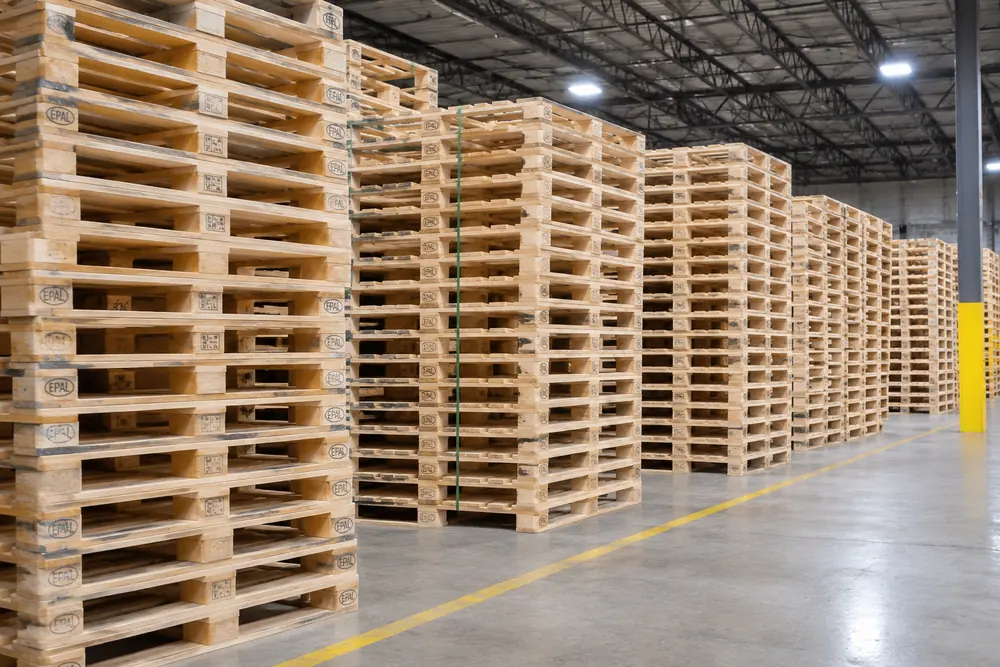
One picture of the stack from about fifteen feet away tells an experienced grader more than a paragraph of description. We can see size, approximate grade mix, moisture exposure and how many units are actually there within about 15%.
Send that photo with a rough count and your ZIP code. You will get a per-unit price by grade band and a pickup window, in writing, usually the same day. Inside Portland metro our minimum is 50 pallets; outside it is 150, because the truck has to earn its diesel.
What happens when the pile is rough
Sometimes the honest answer is that the pile has no resale value. Wet, broken, mixed with non-wood, or sitting on dirt for two winters. In that case we usually still collect it free of charge, because the fibre has value to us even when the pallets do not.
The only things we cannot take are methyl-bromide fumigated wood (look for an MB stamp), painted or chemically contaminated wood, and fire-damaged material. If you have those, we will tell you who can handle them properly rather than quietly mixing them into a mulch stream.
The paperwork that makes your sustainability team happy
Every collection generates a weight ticket, a count sheet by grade, and a diversion certificate. That certificate is the document your ESG reporting actually needs: measured pounds of wood diverted from landfill, with a date and a signature.
Customers routinely tell us the certificate is worth as much internally as the cheque. It converts a yard-cleanup task into a reportable sustainability outcome, which is how pallet piles finally get attention from people who have never touched a forklift.